For years, dietary fat was treated as something to avoid. Then the conversation swung in the other direction, and suddenly every kind of fat seemed to be labelled a "healthy fat."
The reality is a little less dramatic.
Fat is an important part of a healthy diet. It provides energy, helps your body absorb vitamins A, D, E and K, and is an important part of cell structure and normal body function. The bigger question isn't whether you should eat fat. It's which fats you're eating, how often, and what foods they are replacing.
Let's make it a little simpler.
What does dietary fat actually do?
Fat has several important jobs in the body.
It provides energy
Fat is an energy-dense nutrient, providing 9 calories per gram. That doesn't make it "bad" - it simply means that relatively small amounts provide a significant amount of energy.
It helps absorb certain vitamins
Vitamins A, D, E and K are fat-soluble, which means dietary fat helps your body absorb them.
It is part of your cells
Fats are an important component of cell membranes and play a role in normal cellular function.
It helps make food satisfying
Fat contributes flavour, texture and satisfaction to meals. A meal containing vegetables, protein, whole grains and a source of fat can be much more satisfying than one that is stripped of fat simply because we're trying to keep the fat content low.
That last point is easy to overlook.
Healthy eating isn't about removing one nutrient. It's about putting foods together in a way that works for you.
The different types of dietary fat
There are three broad categories of dietary fat: unsaturated, saturated and trans fats.
Unsaturated fats
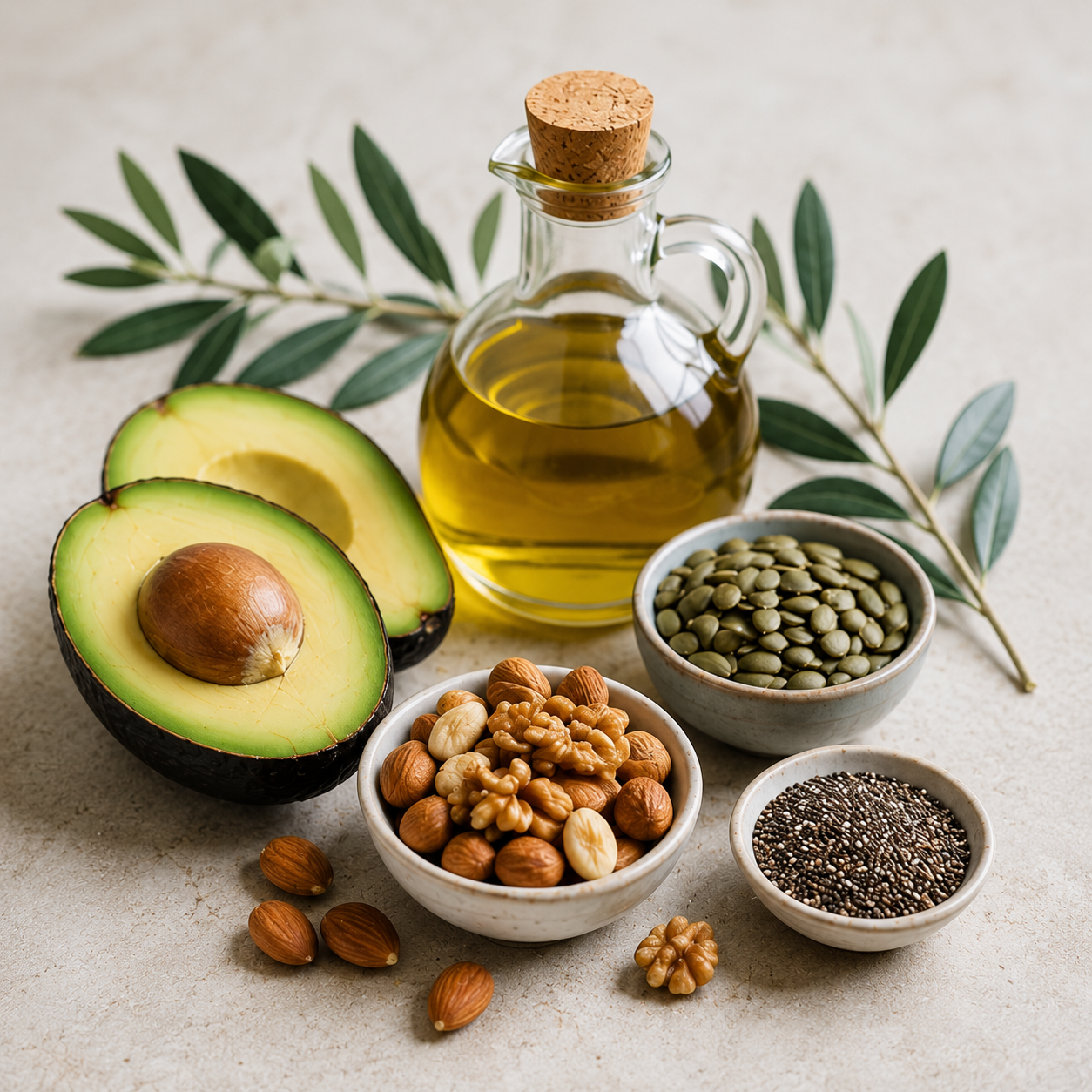
Unsaturated fats include monounsaturated and polyunsaturated fats. These are the fats we generally want to include regularly.
Good food sources include:
Olive oil
Avocado and avocado oil
Nuts
Seeds
Fatty fish such as salmon, sardines and trout
Soy foods such as tofu and edamame
Omega-3 fatty acids are a type of polyunsaturated fat found in foods such as fatty fish, walnuts, flax and chia seeds.
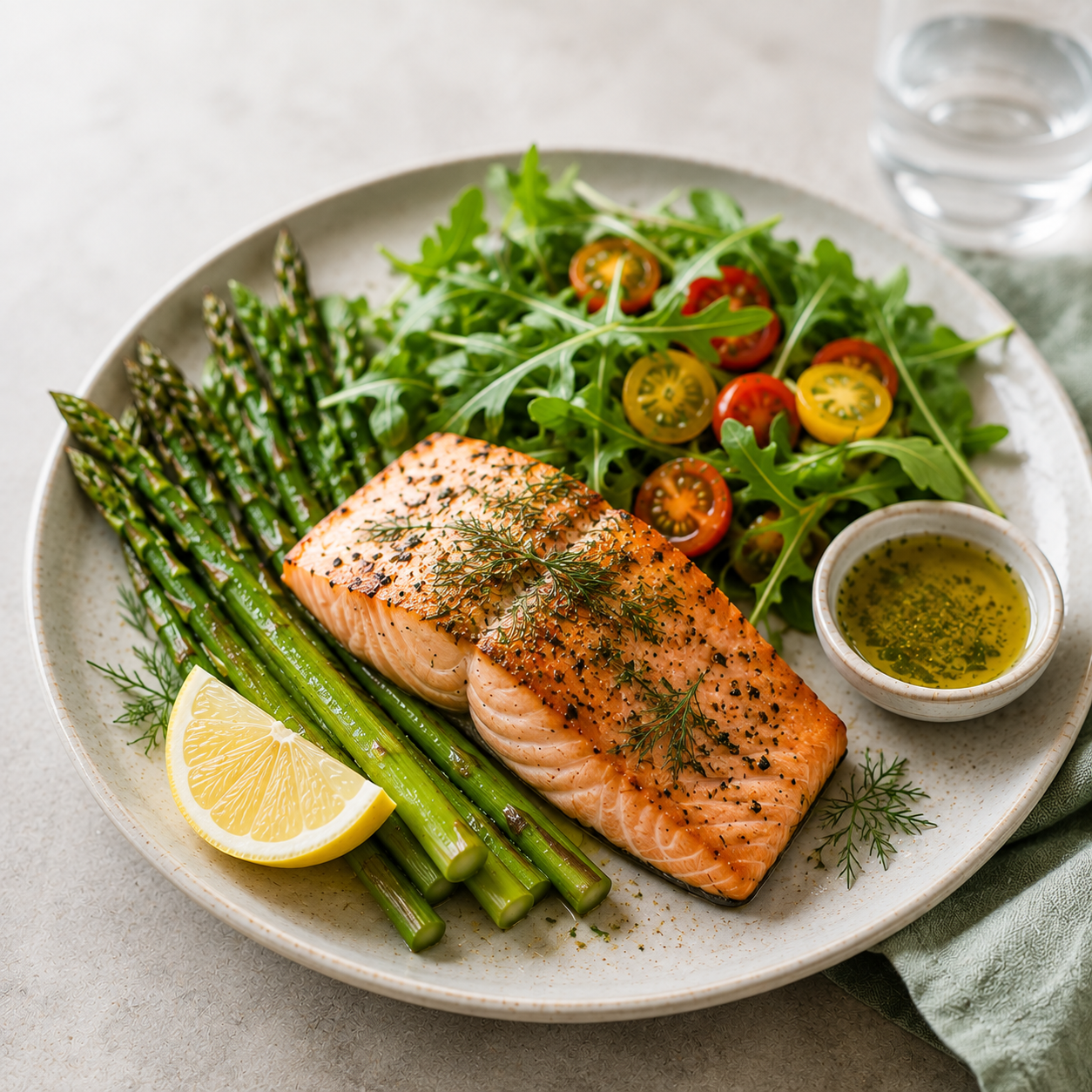
Health Canada recommends choosing foods containing mostly unsaturated fats in place of foods containing mostly saturated fats, particularly because this pattern can help lower LDL cholesterol and support cardiovascular health.
Saturated fats
Saturated fats are found naturally in a variety of foods, including:
Butter
Ghee
Cheese
Cream
Higher-fat meats
Coconut and palm oils
This is an area where nutrition advice has become much more nuanced over the years.
Rather than thinking of individual foods as simply "good" or "bad," it's more useful to look at what you're eating regularly and what you're choosing instead.
For example, replacing some foods high in saturated fat with foods rich in unsaturated fats - such as nuts, seeds, avocado, fish or olive oil - can help lower LDL cholesterol and support cardiovascular health.
That doesn't mean you need to be afraid of butter or cheese. It means they don't need to be your primary sources of dietary fat.
Think variety, not perfection.
Trans fats
Trans fats are a type of unsaturated fat that can occur naturally in small amounts in some animal foods, but they have also historically been produced during food processing.
Industrial trans fats are particularly concerning because they increase cardiovascular risk.
In Canada, partially hydrogenated oils - the major historical source of industrial trans fats - are prohibited from being added to foods. That means this is much less of a concern in the Canadian food supply than it once was.
Still, it's worth paying attention to the foods you eat regularly. Highly processed foods are generally not where we want most of our dietary fats coming from.
So, which fats should you eat?
This is where I think nutrition advice can get unnecessarily complicated.
You don't need to memorize a list of "perfect" fats.
Instead, build meals around foods that naturally provide a variety of nutrients and include unsaturated fats regularly.
Think:
Olive oil on vegetables or in a salad dressing
Avocado with eggs or on toast
A handful of nuts or seeds
Chia or ground flax in oatmeal or yogurt
Salmon, sardines or trout
Nut or seed butter
Avocado or olive oil for cooking
And remember that foods don't have to contain only one type of fat.
A food can contain a mixture of different fatty acids. What matters most is the overall pattern of eating over time, not whether one individual food passes a "healthy fat" test.
A few common fat myths
Myth: Eating fat makes you fat.
Not quite.
Fat is energy-dense, so portions do matter, just as they do with any energy-containing food. But eating fat isn't automatically associated with weight gain.
The bigger picture is your overall eating pattern, energy intake, activity, and the foods making up your diet.
There's no need to eliminate fat simply because you're trying to eat well.
Myth: A low-fat diet is automatically healthier.
Not necessarily.
The goal isn't to make your diet as low in fat as possible.
Current Canadian guidance focuses on the quality of the fat, recommending foods containing mostly unsaturated fats in place of foods containing mostly saturated fats.
That's a much more useful way to think about it than simply counting grams of fat.
Myth: All saturated fat is the same.
Saturated fat is a category of fat found in many different foods, and your overall dietary pattern matters.
Rather than trying to identify a single "good" or "bad" saturated fat, focus on the bigger picture: make unsaturated fats your more frequent choice and limit foods that are particularly high in saturated fat.
Myth: You need to avoid fat when eating carbohydrates.
You don't.
A meal containing carbohydrates, protein, fibre and fat can be perfectly balanced.
In fact, adding a source of fat to a meal can make it more satisfying and enjoyable.
Think about the difference between:
a plain piece of toast
and
whole-grain toast with avocado and an egg.
Both contain carbohydrates, but the second meal also provides protein and fat and is likely to be much more satisfying.
That's the kind of balance I mean.
What about cholesterol?
This is another area where the conversation around dietary fat has become confusing.
You may have heard foods described as containing "good" or "bad" cholesterol. Those terms can oversimplify what's actually happening.
When it comes to cardiovascular health, LDL cholesterol is an important risk factor, and dietary patterns that replace saturated fats with unsaturated fats can help lower LDL cholesterol.
This is one reason I prefer to focus on food patterns rather than individual foods.
Instead of asking:
"Is butter bad?"
A more useful question is:
"What fats make up most of my diet, and what could I use more often in their place?"
That's a much more practical question.
Putting healthy fats into everyday meals
You don't need a complicated plan.
Start by looking at the meals you already eat.
At breakfast
Try:
Chia or ground flax in oatmeal
Nuts or seeds on yogurt
Nut or seed butter on whole-grain toast
Avocado alongside eggs
At lunch
Try:
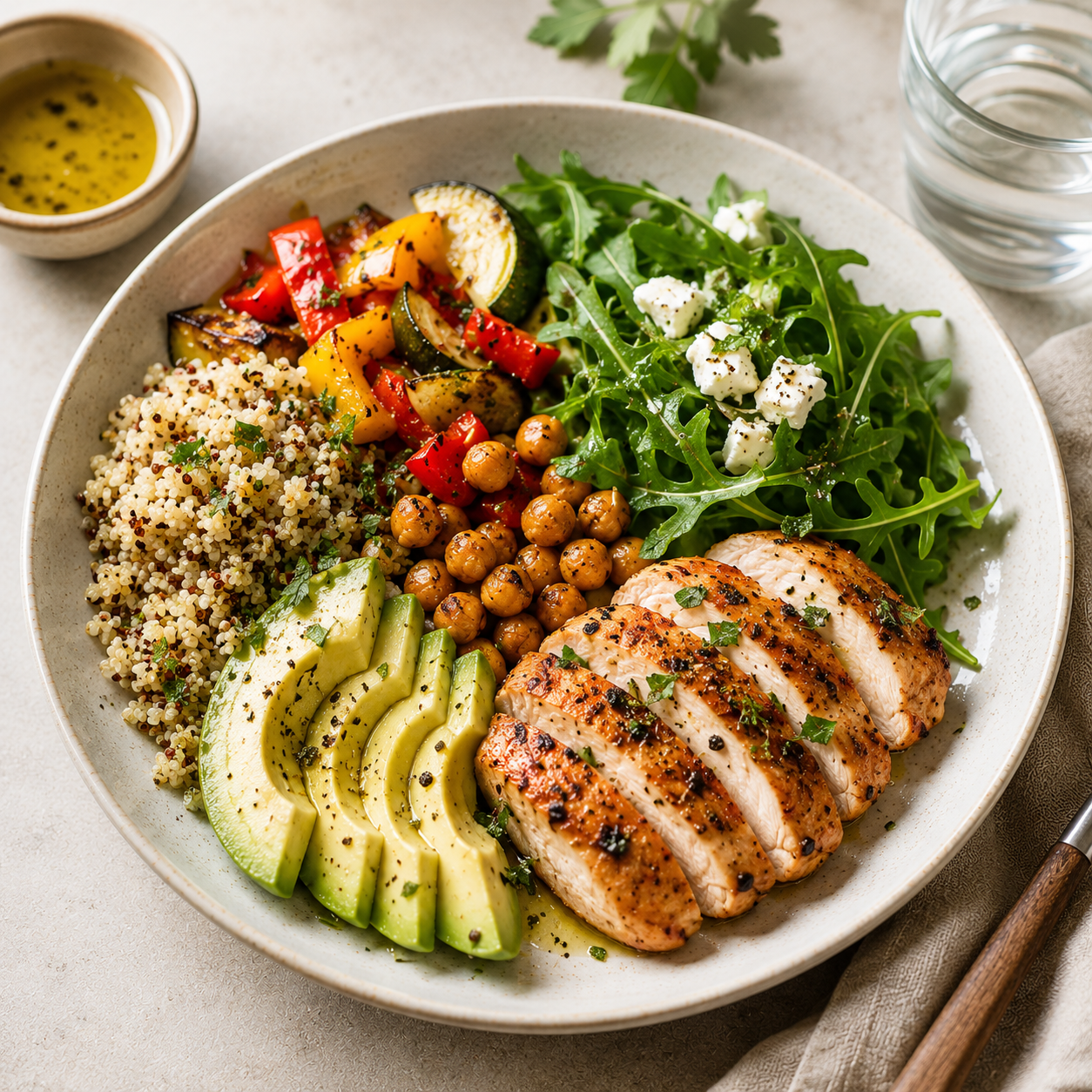
Olive-oil based dressing on a salad
Avocado in a grain bowl or sandwich
Nuts or seeds sprinkled over a salad
Salmon, tuna or another fish
At dinner
Use:
Olive oil for cooking
A simple olive-oil based dressing
Nuts or seeds in a vegetable dish
Fatty fish such as salmon, trout or sardines
For snacks
Think about pairing foods rather than looking for a "fat snack."
For example:
Apple with nut butter
Vegetables with hummus
Yogurt with nuts or seeds
Fruit with a handful of nuts
The goal isn't to add fat to everything.
It's simply to stop being afraid of it and start using it intentionally.
The bottom line
Fat isn't something you need to eliminate from your diet.
It's an important nutrient, and it can make food more satisfying and enjoyable.
Rather than getting caught up in whether one particular fat is "good" or "bad," focus on the bigger picture:
Choose foods containing mostly unsaturated fats regularly.
Include foods such as nuts, seeds, avocado, fish and healthy vegetable oils.
Be mindful of foods high in saturated fat, particularly when they make up a large part of your overall diet.
Don't worry about trying to create a perfect diet.
And most importantly, look at your whole pattern of eating rather than judging individual foods.
That's where good nutrition gets much simpler.